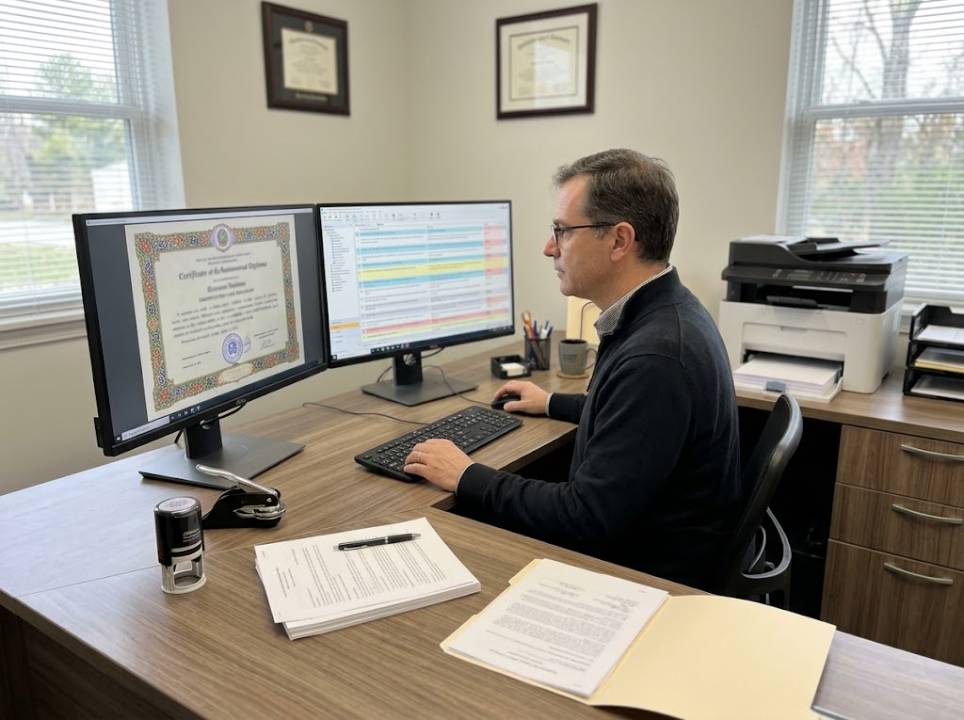
Certified translators handle a steady stream of short, highly structured documents. Birth certificates from Mexico, marriage records from the Philippines, diplomas from India, police clearances from Brazil, bank statements from Ukraine. Each one must be translated completely and accurately, formatted so an official can compare it with the original, and certified with a signed statement.
Many of these documents look almost identical from one client to the next. Computer-assisted translation software, set up correctly, turns that repetition into speed without cutting corners on accuracy.
Why repetition is an opportunity
A civil registry in a given country uses the same form for years. Field labels, headings, legal notes and stamp texts repeat on every certificate. Only names, dates, places and registration numbers change. In a CAT environment, the first translation of each form populates the translation memory. From the second client onward, every fixed element appears as an exact match, and the translator focuses on the variable data.
For high-volume certified work, that can cut translation time on standard documents dramatically while improving consistency between clients.
OCR and scanned documents
Most certified documents arrive as scans or phone photos. Good software includes or connects to optical character recognition, turning images into editable text. The quality of that conversion matters: misread characters create poor memory matches and risk errors in names or numbers. Always check OCR output against the image before translating, particularly for handwritten entries.
Reproducing the layout
Officials reviewing a certified translation, including immigration caseworkers, expect it to mirror the structure of the original. Tables, columns, stamps and signatures should appear in the same relative positions, with notes such as [stamp] or [signature illegible] where appropriate. A CAT editor that preserves formatting from Word or converted PDFs saves a great deal of manual layout work after translation.
Templates per country and document type
Experienced certified translators build libraries: one project template per document type and country, with the memory and termbase already attached. A Mexican birth certificate template, a Philippine marriage certificate template, an Indian degree certificate template. Starting from the right template means the fixed text is already done.
The template is where years of experience become reusable. It also makes it easier to train new team members, who inherit approved wording from day one.
Names, dates and numbers
Accuracy in personal data is non-negotiable. Quality checks should compare every number and date between source and target, flag missing values and highlight inconsistencies. Name spellings must match the client's passport. A termbase entry per client, listing approved spellings of names that appear across several documents, keeps a family's birth, marriage and divorce records consistent.
The certification statement
Requirements for certified translation differ by country and agency, but most require a signed statement of accuracy and competence. Storing approved statement wording as reusable text in the editor, in each language pair, ensures every delivery meets the receiving authority's expectations. Fewer rejections mean happier clients and less rework.
Security for personal documents
Certified work involves passports, medical records and financial data. Software used for these documents should offer encrypted storage, controlled access and clear deletion policies. Avoid uploading personal documents to free consumer services with unclear data practices. Clients increasingly ask how their documents are protected, and a clear answer builds trust.
Choosing with certified work in mind
General reviews rarely focus on the needs of certified translators. When reading advice on choosing the best cat tool, filter it through your own priorities: OCR quality, layout preservation, template management, number checks, data security and pricing that suits a small business. Feature lists aimed at large localisation departments may include much you will never use.
Test candidates on your ten most common document types. Measure how long each takes from scan to signed PDF, and how often reviewers find errors. Real numbers beat marketing claims.
Review and second checks
Even short certificates benefit from a second pair of eyes. A CAT environment with a separate review step lets a colleague check the translation segment by segment, with every correction tracked. For solo translators, a final self-review in a split view, source on the left and target on the right, combined with automated checks, provides a structured last pass. Keeping a record of who translated and who reviewed each document is also useful if an authority later raises a question.
Handling unusual documents
Not every request fits a template. Old handwritten records, church certificates, court judgments with long narrative sections and academic transcripts with dozens of course titles require full attention. Here the software helps differently, by keeping course names consistent across a transcript, suggesting previously approved translations of legal phrases and checking that every grade and date has been carried over. The translator's judgement remains central, but the routine checks happen automatically.
Delivering faster without risk
Clients ordering certified translations are often under time pressure from visa appointments, university deadlines or court dates. Faster turnaround is a genuine competitive advantage, but only if accuracy is never compromised. With templates, memories and automatic checks, certified translators can offer both: quick delivery and documents that pass official scrutiny the first time.